Top 15 Container Gardening ideas Grow Anywhere Without Yard.
You see beautiful lawn on your neighbours and friends house and feel discouraged because you live in an apartment, have terrible soil, or just a tiny patio. You tried planting in the ground but weeds took over, or nothing grew well. Store-bought vegetables lack flavor and fresh herbs cost too much. You want homegrown tomatoes,…
You see beautiful lawn on your neighbours and friends house and feel discouraged because you live in an apartment, have terrible soil, or just a tiny patio. You tried planting in the ground but weeds took over, or nothing grew well. Store-bought vegetables lack flavor and fresh herbs cost too much.
You want homegrown tomatoes, fresh basil, and pretty flowers but think you need a big backyard to make it happen. Container gardening solves all these problems by letting you grow plants anywhere – balconies, porches, driveways, or even indoors. You control the soil quality, move plants to follow the sun, avoid ground pests and weeds, and start small without overwhelming yourself.
Also read this medium guide i hope this beneficial for you.
Choose Containers With Proper Drainage Holes.
Your container choice matters more than you think for plant success. Every pot needs drainage holes in the bottom so excess water escapes and roots don’t sit in soggy soil that causes rot. Plastic pots are lightweight and affordable, making them perfect for renters and balcony gardeners who need to move plants around.

Terracotta breathes well and looks classic but dries out quickly in hot weather requiring more frequent watering. Ceramic glazed pots come in beautiful colors and hold moisture longer but cost more and can crack in freezing temperatures.
Use Quality Potting Mix Instead of Garden Soil.
Never use dirt from your yard in containers because it compacts, drains poorly, and brings weeds and diseases. Buy bagged potting mix made specifically for containers with ingredients like peat moss, coconut coir, perlite, and compost. The fluffy texture allows water to drain while holding enough moisture for roots.

Quality mix contains nutrients to feed plants for the first few weeks of growth. Potting soil weighs less than garden dirt, which matters when moving heavy pots or gardening on balconies with weight limits. Mix in extra perlite or vermiculite for plants that need excellent drainage like succulents and herbs.
Add compost to standard potting mix for vegetable containers that need extra nutrients. You can make your own mix combining equal parts peat moss, perlite, and compost to save money on large plantings. Pre-moistening dry potting mix before planting makes it easier to work with and ensures even moisture.
Match Plant Size to Container Size.
Small pots mean small plants while larger containers support bigger growth. Lettuce and herbs grow happily in 6-8 inch pots but tomatoes need at least 5-gallon containers to produce well. One tomato plant per large container works better than cramming multiple plants that compete for nutrients and water.

Dwarf and patio varieties of vegetables are specifically bred for container growing and stay more compact. Read seed packets and plant tags to check mature size and root depth requirements before choosing containers. Deep-rooted plants like carrots need tall containers while shallow-rooted lettuce does fine in wider, shorter pots.
Combining plants in one large container works when they have similar water and sun needs – like basil, parsley, and chives together. Avoid mixing heavy feeders with light feeders in the same pot since they need different fertilizing schedules.
Place Containers Where Plants Get Sunlight.
Most vegetables and flowers need 6-8 hours of direct sunlight daily to thrive and produce. Watch your space throughout the day to see which areas get the most sun before placing containers. South-facing locations receive the most sunlight in the northern hemisphere while north-facing spots stay shady.
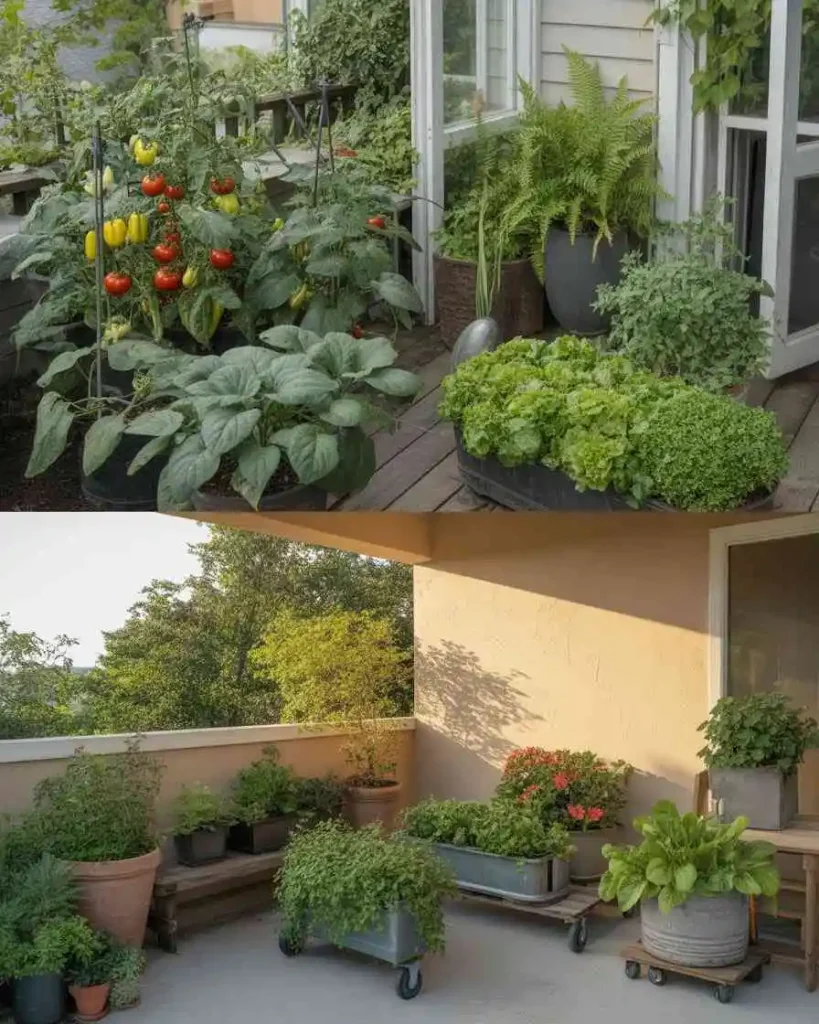
East-facing areas get gentle morning sun perfect for lettuce and leafy greens that bolt in intense heat. West-facing locations receive hot afternoon sun ideal for heat-loving tomatoes, peppers, and squash. Move containers on wheels or dollies to follow the sun as seasons change and shadows shift. Reflective surfaces like white walls or light-colored pavement bounce extra light onto plants near them.
Water Consistently Based on Plant Needs.
Container plants dry out faster than ground plantings because roots can’t spread deep for moisture. Check soil daily by sticking your finger two inches down – if it feels dry, water thoroughly until it drains from the bottom. Early morning watering is best so leaves dry during the day and plants have moisture for hot afternoons.

Terracotta and fabric pots dry out quickest requiring daily watering in summer heat. Plastic and glazed ceramic hold moisture longer letting you water every 2-3 days in moderate weather. Vegetables and flowers need consistent moisture – letting them dry completely then flooding them stresses plants and reduces production.
Mulching the soil surface with bark chips or straw slows evaporation and reduces watering frequency. Self-watering containers with built-in reservoirs work great for busy people and vacation periods. Drip irrigation or soaker hoses on timers automate watering for multiple containers saving time and ensuring consistency.
Feed Plants Regularly With Appropriate Fertilizer.
Container plants need regular feeding because frequent watering washes nutrients out through drainage holes. Most potting mixes contain starter nutrients that last only a few weeks before plants need additional food. Liquid fertilizers diluted in water provide quick nutrition and work well for vegetables and flowers.

Granular slow-release fertilizers sprinkled on soil surface feed plants gradually over months with less frequent application. Organic options like compost tea, fish emulsion, or seaweed extract feed plants while improving soil biology. Vegetable containers need fertilizer every 1-2 weeks during active growth and fruiting.
Flowering plants need high-phosphorus formulas to encourage blooms while leafy greens need more nitrogen for foliage. Follow package directions because over-fertilizing burns roots and creates weak, leggy growth. Yellowing leaves often signal nutrient deficiency easily fixed with appropriate fertilizer.
Start Seeds Indoors or Buy Transplants.
Growing from seed saves money and offers more variety but takes patience and time. Start seeds indoors 6-8 weeks before your last frost date in small pots with seed-starting mix. Keep soil warm and moist until seeds sprout then provide bright light to prevent leggy seedlings.
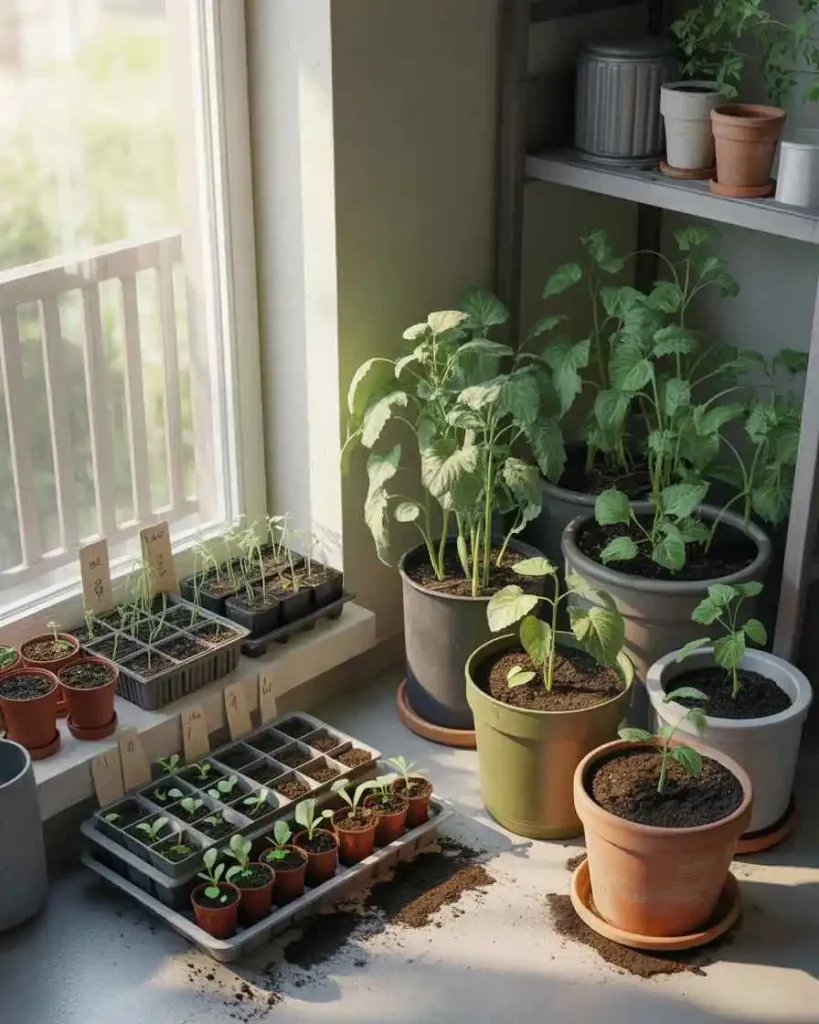
Transplant seedlings to larger containers once they develop true leaves and outdoor temperatures are appropriate. Buying transplants from nurseries gives you a head start and guarantees the varieties you want. Choose stocky plants with dark green leaves and no flowers or fruit yet.
Group Plants With Similar Water Needs.
Mixing plants with different watering requirements in one container creates problems where some get too much water while others stay too dry. Succulents and cacti need infrequent deep watering while ferns and impatiens want consistently moist soil. Herbs like rosemary, thyme, and oregano prefer drier conditions between waterings.

Tomatoes, peppers, and cucumbers need regular consistent moisture for best production. Create separate containers for each watering group so you can care for them properly without compromise. Drought-tolerant plants work great for hot, sunny spots that dry out quickly or for gardeners who forget to water regularly.
Moisture-loving plants do better in larger containers that hold more soil and water or in self-watering pots. Mediterranean herbs grown together in one container simplify care since they all want similar conditions.
Provide Support for Climbing and Vining Plants.
Tomatoes, cucumbers, pole beans, and peas grow tall and need support structures to stay upright and productive. Add stakes, cages, or trellises when planting so you don’t damage roots later. Tomato cages should be at least 5 feet tall for indeterminate varieties that grow all season.

Bamboo stakes work for peppers and smaller tomato varieties needing light support. Trellises attached to container edges or walls let cucumbers and beans climb vertically saving horizontal space. Training vines upward also improves air circulation reducing disease and makes harvesting easier.
Tie plants loosely to supports with soft material like strips of old t-shirts that won’t cut into stems. Flowering vines like morning glories or sweet peas beautify balconies and porches when trained up railings or lattice. Heavy fruiting plants need sturdy supports that won’t topple – secure tall cages to container edges or weight the bottom with rocks.
Protect Plants From Extreme Weather.
Container plants are more vulnerable to weather extremes than ground plantings because roots sit above ground with less insulation. Move containers to sheltered locations during severe storms, high winds, or hail warnings. Frost-sensitive plants need to come indoors or get covered with fabric frost blankets when temperatures drop near freezing.

Dark containers absorb heat and can cook roots in extreme summer temperatures – move them to shadier spots or group pots together so they shade each other. Mulching soil surfaces helps moderate temperature swings and protects roots. Heavy rain can waterlog containers without drainage or wash away soil – tip pots slightly to drain excess water after storms.
Choose Compact Varieties Bred for Containers.
Seed companies now breed dwarf and patio varieties specifically for container growing that stay smaller but still produce well. Patio tomatoes like ‘Tiny Tim’ or ‘Patio Princess’ grow 2-3 feet tall perfect for pots. Bush cucumbers and zucchini produce in containers while standard vining types get too large.

Dwarf fruit trees in containers give you apples, lemons, or figs in small spaces. Miniature peppers like lunchbox or snack peppers thrive in pots while staying compact. Look for words like dwarf, patio, bush, compact, or container on seed packets and plant tags.
Rotate Crops and Refresh Soil Between Seasons.
Don’t grow the same plant family in the same container year after year because diseases and pests build up in the soil. Rotate plant families – if you grew tomatoes this year, plant beans or lettuce next year in that container.

Dump out old potting mix and replace it completely for annual vegetables each spring. Perennial plants can stay in the same containers but need fresh compost added to the top layer each spring. Watch for signs that soil is depleted like poor growth, yellowing leaves, or reduced production despite proper care and feeding.
Create Combinations With Flowers and Foliage
Mix vegetables, herbs, and flowers in the same containers for beauty and function. Nasturtiums have edible flowers and leaves plus they repel aphids making them perfect tomato companions.

Marigolds deter some pests and look cheerful planted around vegetable containers. Tall plants go in the back or center, medium plants in the middle, and trailing plants cascade over edges creating layered interest.
Combine plants with different textures like soft lamb’s ear with spiky lavender and trailing ivy. Use the thriller, filler, spiller formula – one tall focal plant, several medium plants to fill space, and trailing plants that spill over edges. Coleus and sweet potato vines provide colorful foliage that complements flowering plants.
Use Vertical Space With Wall Planters and Hanging Baskets.
When floor space is limited, grow upward using walls, railings, and overhead areas. Hanging baskets hold trailing flowers, cherry tomatoes, or strawberries that cascade beautifully. Wall-mounted planters and pocket organizers hold multiple small plants in tight spaces.

Railing planters hook over balcony edges without taking up floor room. Vertical garden systems with stacked planters grow herbs and lettuce in small footprints. Ensure hanging points can support the weight of containers plus soil and water – use heavy-duty hooks rated for appropriate weight.
Experiment and Learn From Each Growing Season.
Container gardening lets you try new plants and techniques with low risk since you’re working on a small scale. Keep simple notes about what works and what doesn’t in your specific conditions. Some plants will thrive while others struggle – focus your energy on what grows best for you.

Don’t fear failure since it teaches you about your space’s microclimate, your watering habits, and plant preferences. Start with easy plants like herbs, lettuce, and cherry tomatoes that tolerate beginner mistakes and produce quickly. Add one or two challenging plants each season to expand your skills without overwhelming yourself.
Frequently Asked Questions.
Conclusion.
Container gardening opens up growing possibilities for everyone regardless of yard size or soil quality. You can grow fresh vegetables, herbs, and beautiful flowers on balconies, patios, driveways, or even indoors with proper light. Start with quality containers that have drainage holes, use potting mix instead of garden dirt, choose plants appropriate for your space and light conditions, water consistently, and feed regularly.