
15 Contemporary Bedroom Ideas for Simple Modern Living.
Does your bedroom feel stuck in the past while the rest of your home looks updated? You’re tired of mismatched furniture, busy patterns, and cramped spaces that don’t work for your family anymore. A contemporary bedroom design brings everything together with clean furniture, smart storage, and colors that make everyone feel relaxed—perfect for busy couples…
Does your bedroom feel stuck in the past while the rest of your home looks updated? You’re tired of mismatched furniture, busy patterns, and cramped spaces that don’t work for your family anymore.
A contemporary bedroom design brings everything together with clean furniture, smart storage, and colors that make everyone feel relaxed—perfect for busy couples and growing kids who need rooms that actually function.
You don’t need a designer’s budget or special skills to make this happen in your own home. With a few key changes to furniture, colors, and layout, your bedroom can look current and stay practical for years without constant updates. Let’s look at real ideas you can start using today.
Pick Simple Bed Frames.
Choose bed frames with straight lines and no fancy decorations or curved posts. Low platform beds work great because they make your ceiling look higher and your room feel bigger. Look for frames in wood, metal, or upholstered fabric in solid colors like gray, white, black, or natural wood tones.

Homeowners switching to contemporary bedroom style start here because the bed is the biggest piece in the room. Parents buying beds for kids appreciate frames that sit lower to the ground for easier access and safer climbing. Make sure the frame has strong support and matches the size of your mattress exactly.
Use Only Three Main Colors.
Select three colors total—usually two neutrals and one accent color you really like. Paint walls in soft gray, warm beige, or clean white as your main background. Add your accent color through pillows, blankets, or one piece of furniture like a chair.

Interior decorators teach this three-color rule because it keeps contemporary bedrooms looking put-together instead of messy. Couples designing their space together can each pick one color they love and use neutrals to balance. Change your accent color anytime by swapping small items without repainting walls.
Hang Curtains at the Ceiling.
Mount curtain rods right below where your wall meets the ceiling, not above the window frame. Let curtains hang all the way down to touch the floor for the best look. Choose solid-colored curtains in light fabrics for daytime privacy or heavier fabrics with blackout lining for better sleep.

Window treatment experts use this ceiling-mount trick in every contemporary bedroom because it makes windows look twice as tall. Parents with children who nap during the day need blackout curtains to keep rooms dark. Stick with white, gray, or beige curtains that work with any color changes you make later.
Add One Large Mirror.
Put up a big mirror on one wall, lean a tall mirror against a wall, or hang one above your dresser. Mirrors bounce light around the room and make small bedrooms look much larger than they are. Choose frames in simple shapes—rectangular or round work best without decorative edges.

Bedroom designers place mirrors across from windows to reflect natural light throughout the space. Couples getting ready for work appreciate full-length mirrors for checking outfits. Keep mirrors at eye level or slightly higher, and make sure they’re securely attached to walls.
Remove Extra Furniture.
Take out any furniture you don’t use daily like extra chairs, old dressers, or unused tables. Keep only the bed, one nightstand per person, and necessary storage pieces in the room. Store seasonal items in closets, under beds, or in other rooms to keep surfaces clear.

Professional organizers help families create contemporary bedrooms by removing 30-40% of furniture that clutters the space. Kids need floor space for playing, so removing bulky toy boxes in favor of closet storage works better. Empty space is part of the design—don’t feel pressured to fill every corner.
Install Better Closet Systems.
Replace wire shelving with solid wood or laminate organizers that have drawers, shelves, and hanging rods. Use matching hangers throughout—white, black, or wood hangers instead of mixed wire and plastic ones.

Group clothes by type and color so your closet looks neat even with the door open. Closet designers create contemporary bedroom storage that hides mess behind clean doors while keeping everything easy to find.
Parents organizing kids’ closets add lower rods and bins so children can reach and put away their own clothes. Good closet systems cost money upfront but save space and reduce bedroom clutter for years.
Choose Solid-Color Bedding.
Buy sheets, blankets, and comforters in solid colors without patterns or prints. Layer different shades of the same color or mix neutrals together for depth. Add one or two patterned pillows if you want, but keep the main bedding simple.

Bedding companies make contemporary bedroom collections in coordinated solid colors that are easy to mix and match. Couples who can’t agree on patterns find solid colors easier to choose together. Kids grow out of character bedding quickly, so starting with solid colors in their favorite color saves money on replacements.
Update Light Fixtures.
Replace old ceiling fans or outdated fixtures with simple pendant lights, modern chandeliers, or recessed lighting. Add bedside lamps with clean shapes—no frilly shades or ornate bases. Use warm white LED bulbs that make the room feel cozy instead of harsh cool white bulbs.

Lighting specialists recommend dimmer switches in contemporary bedrooms so you can adjust brightness for different times of day. Parents reading bedtime stories need good task lighting that doesn’t wake sleeping partners. Make sure all light fixtures in the room share similar finishes like all black, all brass, or all brushed nickel.
Paint One Accent Wall.
Choose one wall and paint it a darker or bolder color than the other three walls. This wall becomes your focal point—usually the wall behind your bed works best. Keep the color in the same family as your other walls, just a few shades darker.

DIY painters create accent walls in contemporary bedrooms to add interest without overwhelming the space. Kids enjoy having one wall in their favorite color while keeping the rest neutral. Use painter’s tape for crisp lines and apply two coats for even coverage.
Add Floating Shelves.
Mount thin shelves directly to the wall without visible brackets for storing books, plants, or decorative items. Space shelves evenly and keep what you display to a minimum—three to five items per shelf looks best.

Choose shelves in wood tones or painted white to match your room colors. Home improvement enthusiasts install floating shelves in contemporary bedrooms because they add storage without taking floor space.
Parents use them for displaying kids’ favorite books or small toys at easy-reach heights. Attach shelves to wall studs with proper anchors to hold weight safely.
Use Matching Nightstands.
Buy two nightstands that match each other in style, size, and color for a balanced look on both sides of the bed. Choose simple designs with one or two drawers and minimal hardware. Make sure they’re the right height—tops should be level with or slightly above your mattress.

Furniture buyers shopping for contemporary bedroom pieces pick nightstands based on storage needs and surface space for lamps and phones. Couples need equal storage on both sides of the bed to avoid arguments. Kids’ rooms can use smaller nightstands or floating shelves that serve the same purpose.
Arrange Furniture Away from Walls.
Pull your bed a few inches away from the wall instead of pushing it tight against the wall. Position nightstands with small gaps between them and the bed. This creates breathing room and makes the bedroom feel more like a designed space.
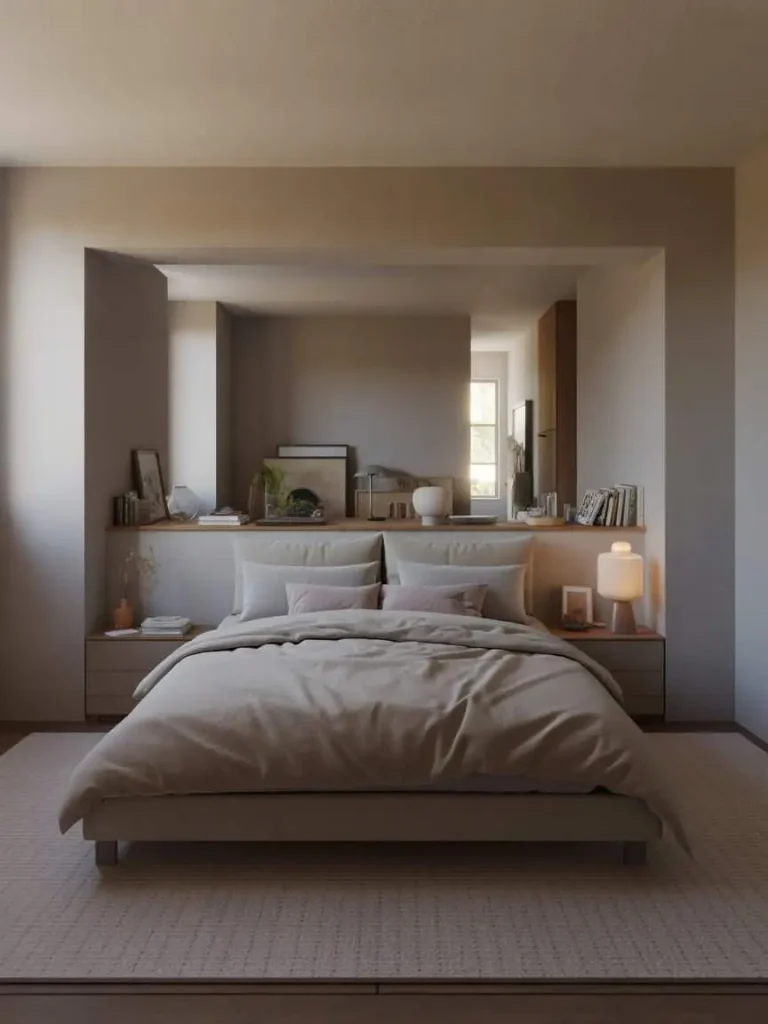
Interior arrangers use this spacing technique in contemporary bedrooms to improve flow and make rooms feel less crowded. Parents setting up kids’ rooms leave space behind beds for air circulation and easier bed-making. Measure carefully so you still have enough walkway space around the bed—aim for at least 24 inches on each side.
Cover Floors Properly.
Use large area rugs on hardwood or tile floors to add warmth and define the sleeping area. Choose rugs in solid colors or simple geometric patterns that complement your bedding. Make sure rugs extend beyond the bed on all sides so your feet land on the rug when you get up.

Flooring experts recommend low-pile rugs for contemporary bedrooms because they’re easier to vacuum and look cleaner. Parents with young children pick washable rugs or indoor-outdoor rugs that handle spills and accidents. If you have carpet already, add a contrasting rug in a different texture for visual interest.
Display Minimal Decorations.
Keep surfaces mostly clear with just one or two meaningful items on each nightstand and dresser. Choose simple vases, small plants, or framed photos instead of collections of many small objects. Rotate decorations seasonally so the room feels fresh without buying new items constantly.

Professional stagers prepare contemporary bedrooms for photos by removing 75% of personal items and decorations. Families with children limit decorations to avoid clutter from school projects and toys mixing with decor. Quality over quantity makes rooms look more expensive and put-together.
Add Blackout Window Shades.
Install roller shades or cellular shades in room-darkening or blackout fabrics behind your curtains. These block outside light completely for better sleep and give you privacy at night. Choose white or neutral colors that blend with your walls when shades are down.

Window covering retailers stock blackout shades specifically for contemporary bedrooms where clean lines matter. Parents helping kids maintain healthy sleep schedules rely on blackout shades for consistent darkness. Combine shades with curtains for complete light control and layered window design.
Frequently Asked Questions
Conclusion.
Your contemporary bedroom starts with simplifying what you have and making smart choices about what comes next. This design style works for every family member because it values function just as much as appearance—rooms look good and actually work for daily life.
You don’t need to change everything at once or spend more than your budget allows. Pick two or three ideas from this list that solve your biggest bedroom problems, make those changes, and see how much better your space feels. Contemporary design is about creating rooms that support rest, relationships, and real life without adding stress or maintenance.