Top 17 Large Dining Room Ideas Everyone Wants in 2026
Large dining room ideas in 2026 shift from stiff formality toward warm, architectural environments designed for genuine connection and celebration. The biggest trend sees homeowners moving back toward closed-concept dining rooms as “jewel boxes within the home” rather than open-plan great rooms. These 17 research-backed dining room ideas reflect how top designers are creating sophisticated…
Large dining room ideas in 2026 shift from stiff formality toward warm, architectural environments designed for genuine connection and celebration. The biggest trend sees homeowners moving back toward closed-concept dining rooms as “jewel boxes within the home” rather than open-plan great rooms.
These 17 research-backed dining room ideas reflect how top designers are creating sophisticated yet welcoming spaces across the USA. From dark wood resurgence to statement ceilings and vintage lighting, these approaches prove that grand dining rooms can feel both elegant and lived-in.
Architectural Wall Paneling
Install rich wall paneling, plaster finishes, or wood wainscoting to add depth and character that makes large rooms feel grounding rather than empty. Dining room trends in 2026 lean toward architectural environments with statement millwork creating ceremony and intentional gathering according to designers.
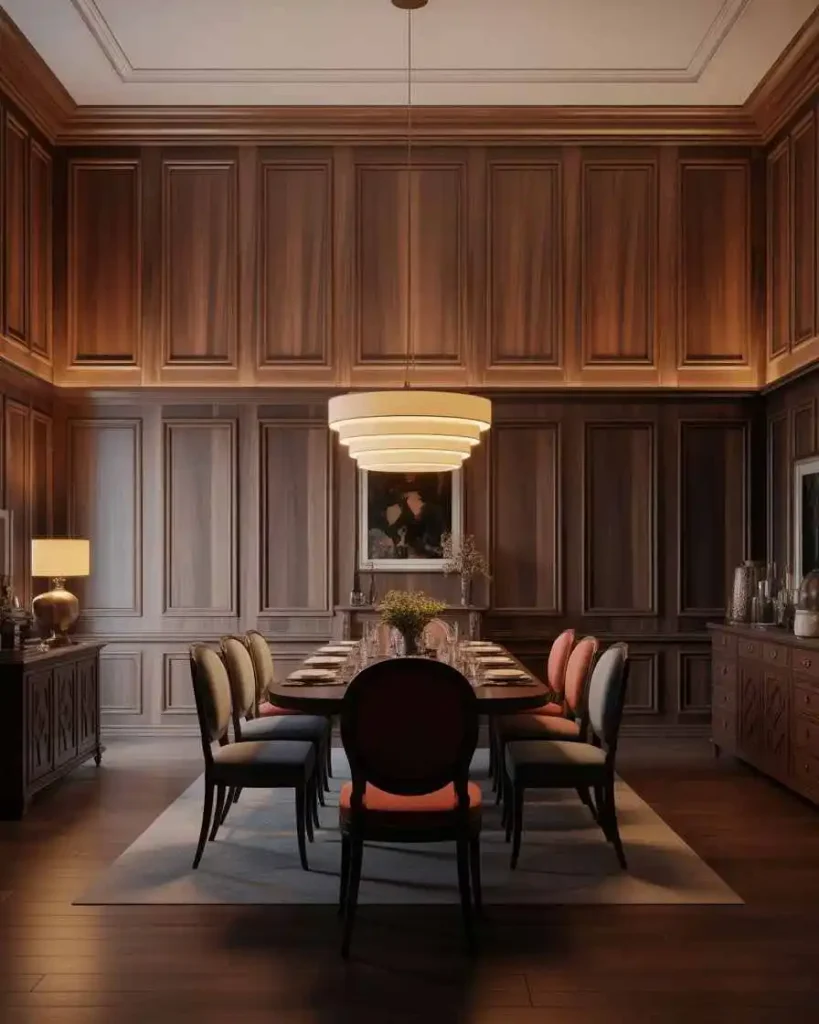
Choose walnut-toned paneling for warmth or paint panels in deep jewel tones for moody sophistication. The vertical detail draws eyes upward, making tall ceilings feel purposeful rather than cavernous.
Add warm layered lighting to highlight the paneling’s depth and create intimate atmospheres despite the square footage. This architectural treatment works across traditional, transitional, and modern styles seeking substance over generic drywall.
Dark Wood Furniture Renaissance
Choose dining tables and sideboards in rich walnut, teak, or ebonized oak finishes as darker woods surge 262% year-over-year according to design forecasts. This dramatic shift reflects broader moves toward warmth, depth, and designs rooted in tradition rather than cold minimalism.
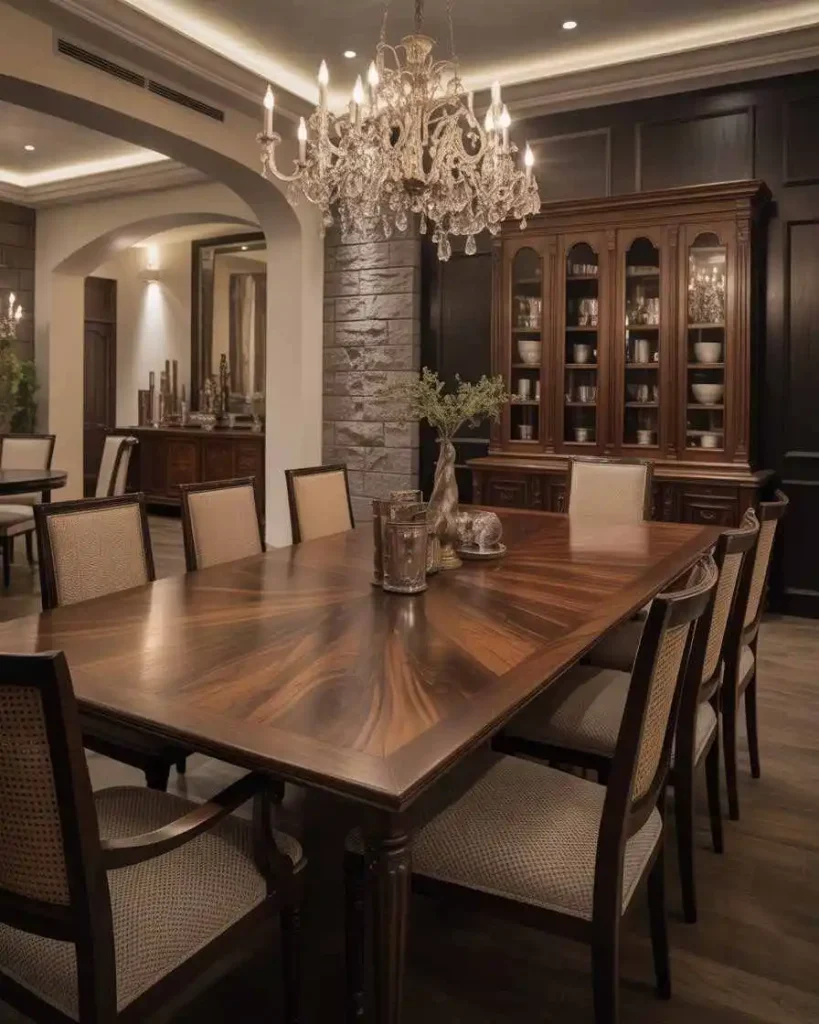
Dark wood anchors large dining rooms beautifully while pairing effortlessly with stone, metal, textured neutrals, and lighter wood accents. The visible grain patterns add organic texture that prevents flat appearances in monochromatic spaces.
Sideboards in particular drive demand for rich finishes, with dining tables as close seconds. Clean and polish dark wood monthly to maintain depth and highlight the natural grain variations.
Statement Stone Tables
Replace traditional wood with sculptural stone dining tables in travertine, marble, or quartzite for artistic drama and permanence. More than 76% of design industry respondents call travertine a leading material for 2026 according to industry surveys.
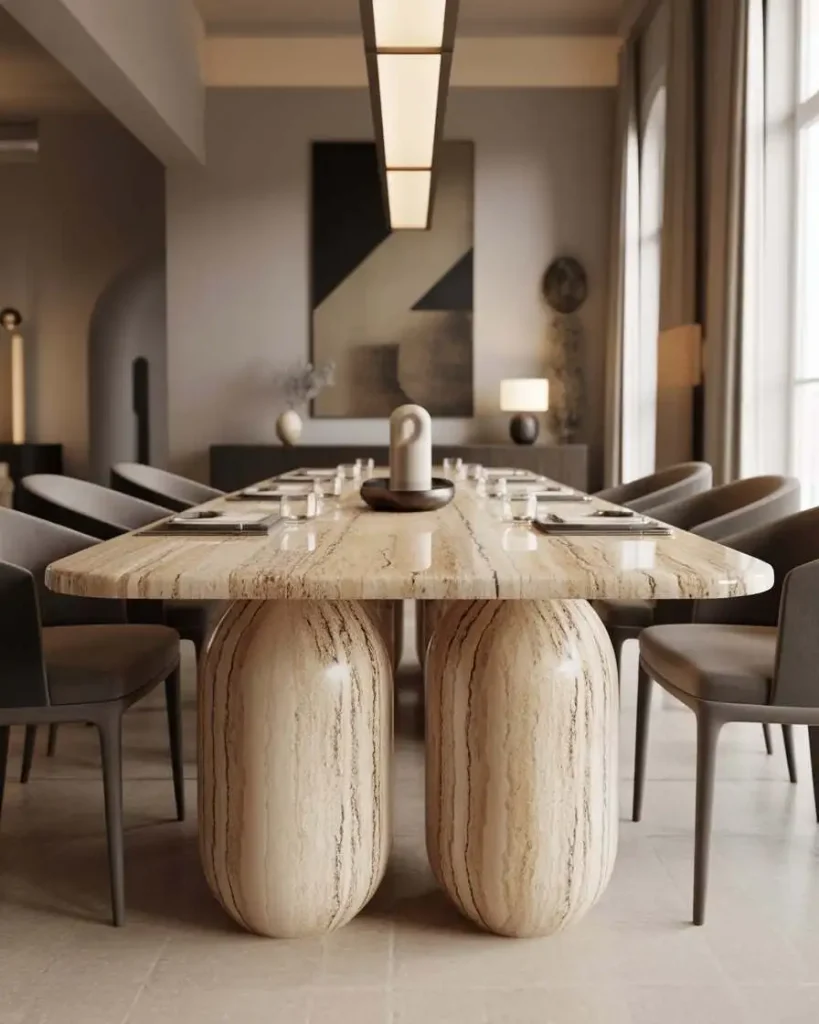
Paired with unique silhouettes and rounded sculptural legs referencing 1970s Italian design, stone tables become functional art pieces. The natural material variations mean each table is genuinely one-of-a-kind with unique veining and color patterns.
Stone surfaces handle heat beautifully and develop character over time through natural patina and use. Choose honed or leathered finishes rather than high-gloss polish for sophisticated, contemporary appearances in large dining rooms.
Dining Room Ideas Layout
Design large dining rooms with multiple zones including formal dining, bar areas, and comfortable lounge seating for pre and post-meal gathering. Dining rooms work harder than ever accommodating weekday meals, special occasions, homework, and Zoom calls according to designers.
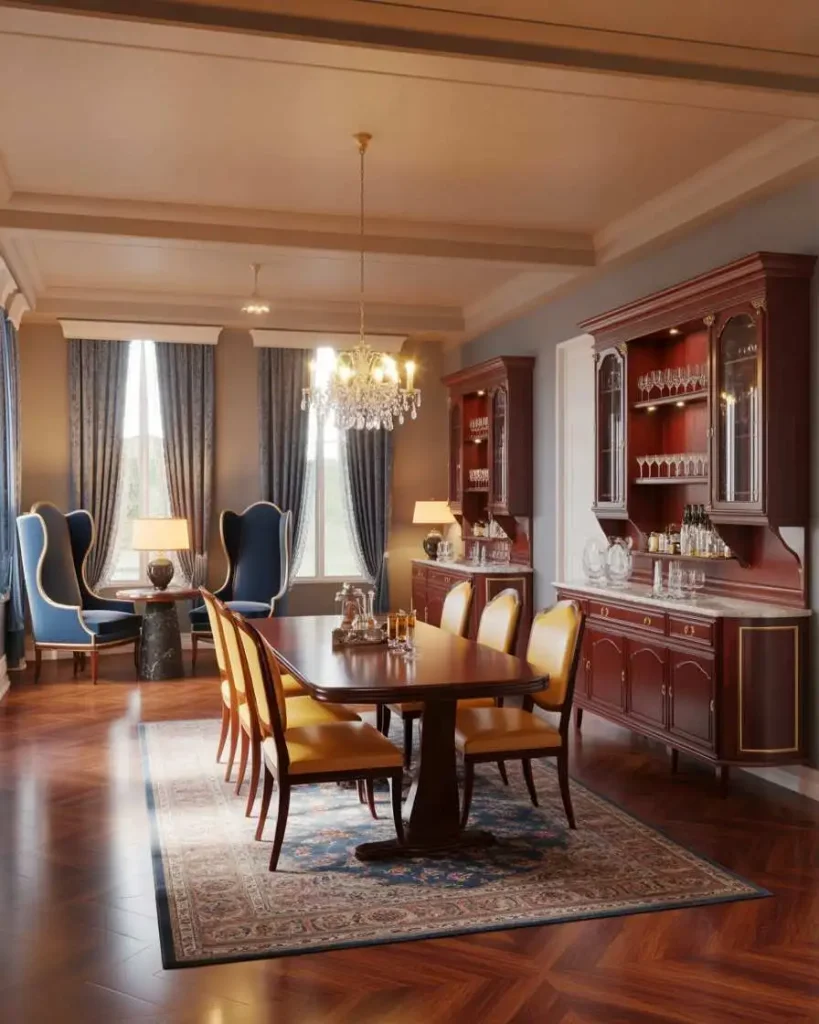
Position the main dining table centrally with adequate circulation space, then add supplemental furniture creating flexible functionality. Include a sideboard or bar cabinet along one wall for serving and storage that doesn’t interrupt flow.
Add a small seating area with two accent chairs near windows for morning coffee or intimate conversations. This multi-functional approach maximizes large square footage while preventing the room from feeling like wasted space between formal dinners.
Jewel Tone Color Blocking
Paint large surfaces in deep jewel tones including cobalt blue, emerald green, cranberry red, or rich plum for dramatic sophistication. Deep jewel tones meet sharp citrus or mineral shades paired for how they shift in different lighting throughout the day.
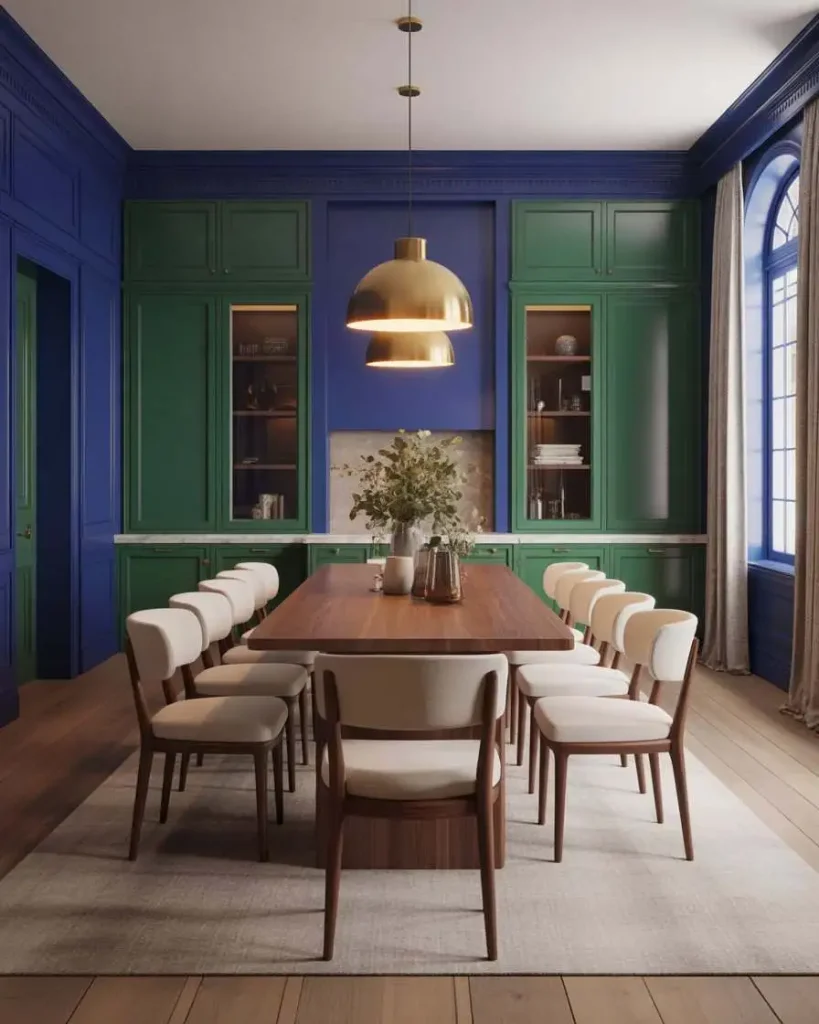
Apply color across walls, cabinetry, or built-in millwork embedding contrast into the architecture itself rather than just accessories. Blends of cobalt and ochre or forest green with coral set sophisticated tones that control the room’s pace.
This works exceptionally well in large dining rooms where bold color creates intimacy rather than overwhelming compact spaces. Balance saturated walls with neutral furniture and natural materials preventing visual fatigue during extended meals.
Vintage Lighting Statements
Hang vintage or vintage-inspired chandeliers with history and patina rather than matching new fixtures to all other finishes. Starting with lighting that has character gives freedom to introduce newer tables or chairs without everything feeling matchy-matchy.
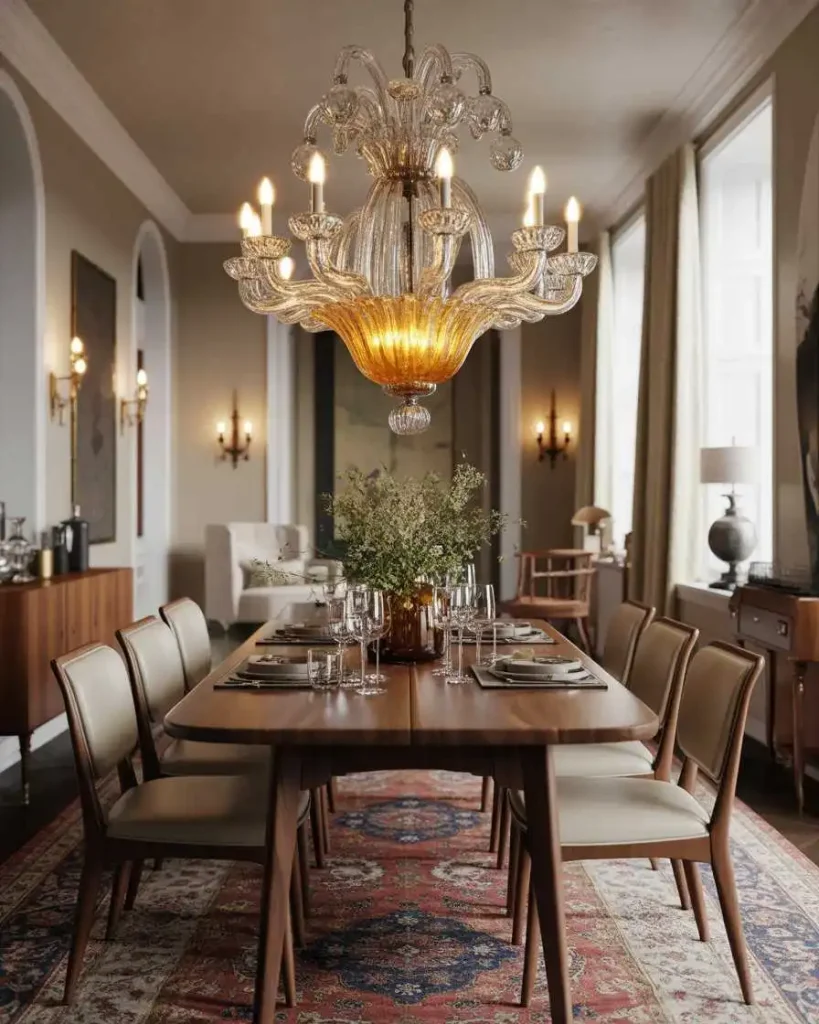
Choose Murano glass chandeliers, mid-century brass fixtures, or antique crystal pieces as jewelry bringing sophisticated finishing touches. The vintage elements suggest pieces collected over time creating layered, personal atmospheres in formal spaces.
Position chandeliers centered over dining tables at heights allowing clearance for seated guests while creating visual anchors. This approach works across all design styles adding instant character that new reproductions simply cannot replicate.
Glossy Ceiling Drama
Paint fifth walls (ceilings) in high-gloss or satin finishes that shimmer and reflect light for jewel-like luminosity across rooms. Expect ceilings to receive royal treatment in 2026 with finishes including gold leaf application or saturated high-gloss paint. The reflective surface adds depth and dimension casting glow over entire dining rooms that flat ceilings cannot achieve.
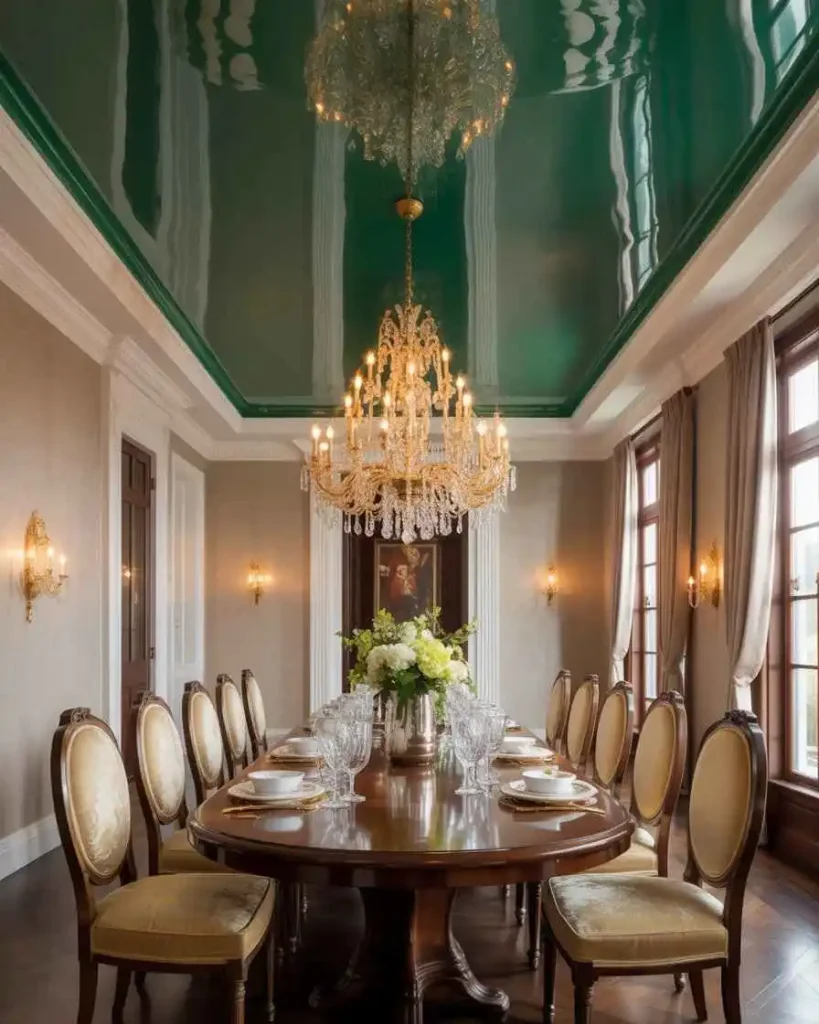
Choose colors darker than walls for cocooning effects or metallics for glamorous sparkle during evening entertaining. This unexpected detail draws attention upward, making tall ceilings in large dining rooms feel intentional rather than empty. Proper surface preparation is essential since glossy finishes highlight every imperfection requiring professional-grade smoothing.
Continuous Mural Wallcoverings
Install large-scale murals or continuous wallpaper patterns that wrap around multiple walls creating immersive, art-driven drama in dining rooms. Murals bring timeless sophistication when given mostly continuous spans allowing designs to breathe without becoming repetitive.
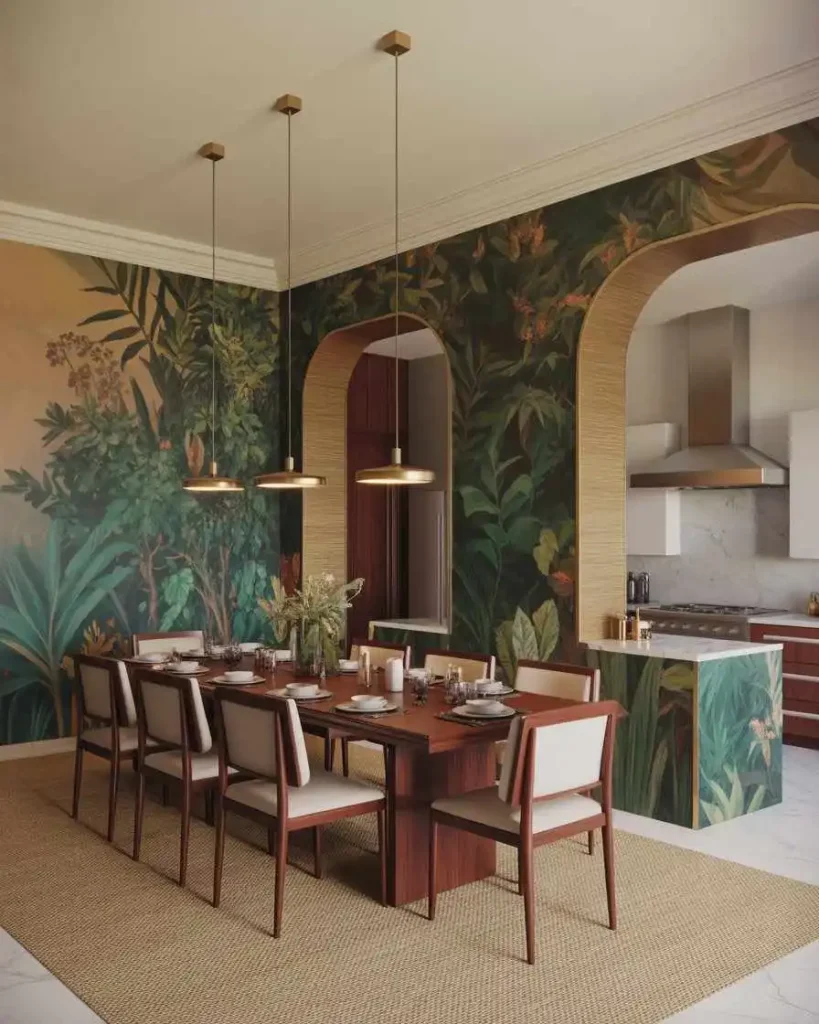
Choose landscapes, botanical scenes, or abstract designs in colors complementing your furniture and overall palette. Designers recommend intentional breaks in patterns so murals don’t lose scale or become visually overwhelming.
This approach works beautifully in large dining rooms where the square footage supports bold visual statements. Consider grasscloth, hand-troweled plaster, or fabric wallcoverings for texture that pleases eyes during extended meals.
Mixed Era Furniture Blending
Combine furniture from different periods including mid-century tables with contemporary chairs or vintage lighting against custom cabinetry for layered sophistication. As personalization trends intensify, 2026 dining rooms merge objects from different eras into single deliberate compositions feeling collected.
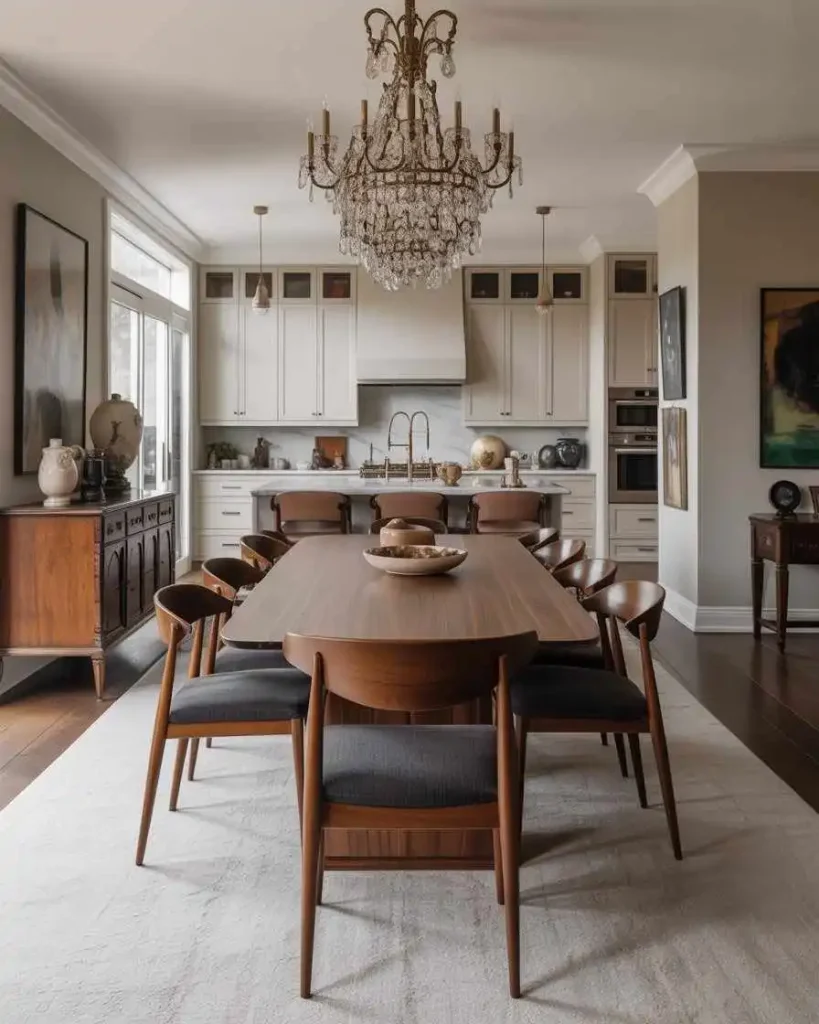
Textiles, ceramics, and artwork converse across spaces through careful proportion and placement creating intentional eclectic environments. This works in large dining rooms providing adequate space for varied furniture styles without visual clutter or cramping.
Balance old and new maintaining some consistent elements like wood tones or metal finishes tying disparate periods together. The layered approach suggests pieces acquired over time through travel and life rather than purchased in single shopping trips.
Cluster Pendant Lighting
Replace single large chandeliers with clusters of smaller pendant lights arranged at varying heights creating layered, contemporary effects. Designers highlight pendant clusters as key trends allowing flexibility through different heights and angles above dining tables.
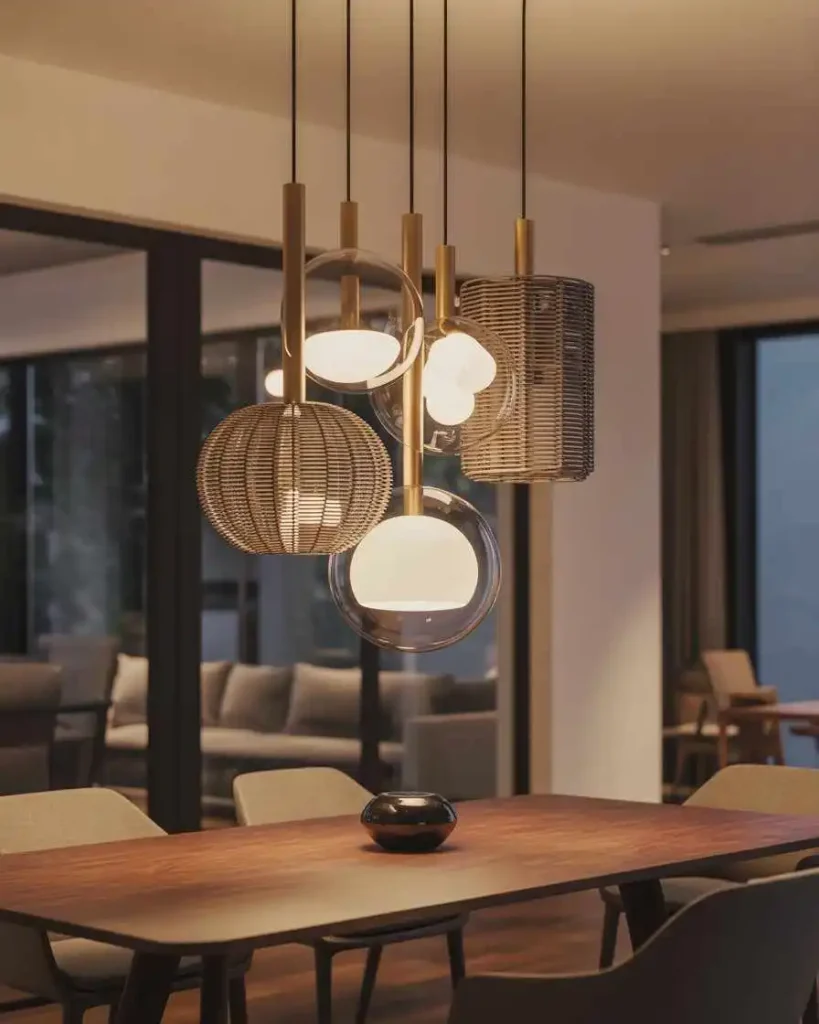
Mix pendant sizes or shapes while keeping materials consistent through brass, glass, or woven rattan for cohesion. Tighter clusters create bright focused lighting while wider spacing produces softer ambient glow throughout large dining rooms. T
his approach feels more current than traditional chandeliers while offering adjustable configurations as tastes evolve. Install on tracks or modular systems allowing repositioning without electrical work as furniture arrangements change over time.
Performance Upholstered Seating
Choose dining chairs with performance fabric or durable leather upholstery designed for comfort during extended meals and conversations. Comfort becomes key in 2026 dining trends with chairs styled for long gatherings rather than just visual appeal.
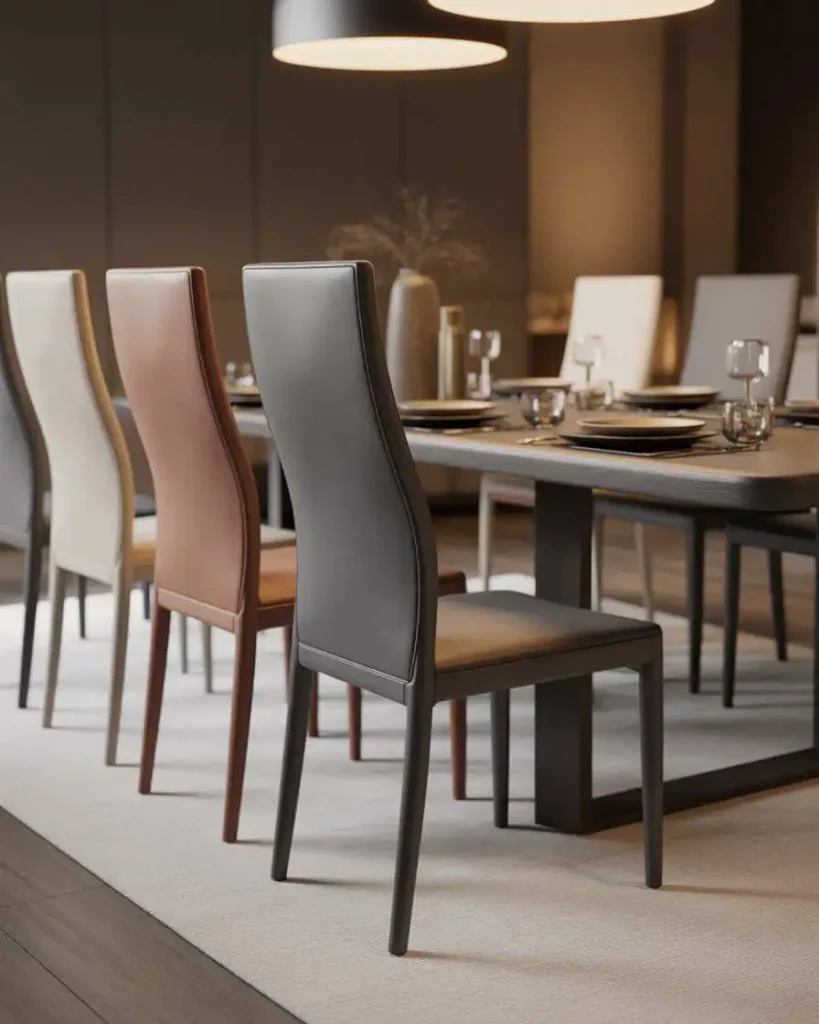
Performance fabrics clean easily and resist stains making them practical for daily use in family dining rooms. Fabric often hugs frames smoothly wrapping over edges with no visible breaks for contemporary streamlined silhouettes.
Some designs feature seats and backs upholstered separately in complementary fabrics allowing seasonal updates without replacing entire chairs. This investment in quality seating transforms large dining rooms into spaces people actually want to linger in rather than rush through meals.
Dimmable Lighting Control
Install dimmer switches on all dining room lighting allowing spaces to adapt from bright family meals to intimate dinner parties seamlessly. Dimmers are essential enabling rooms to evolve as evenings unfold, guiding tone from spirited conviviality to soft after-dinner conversation.
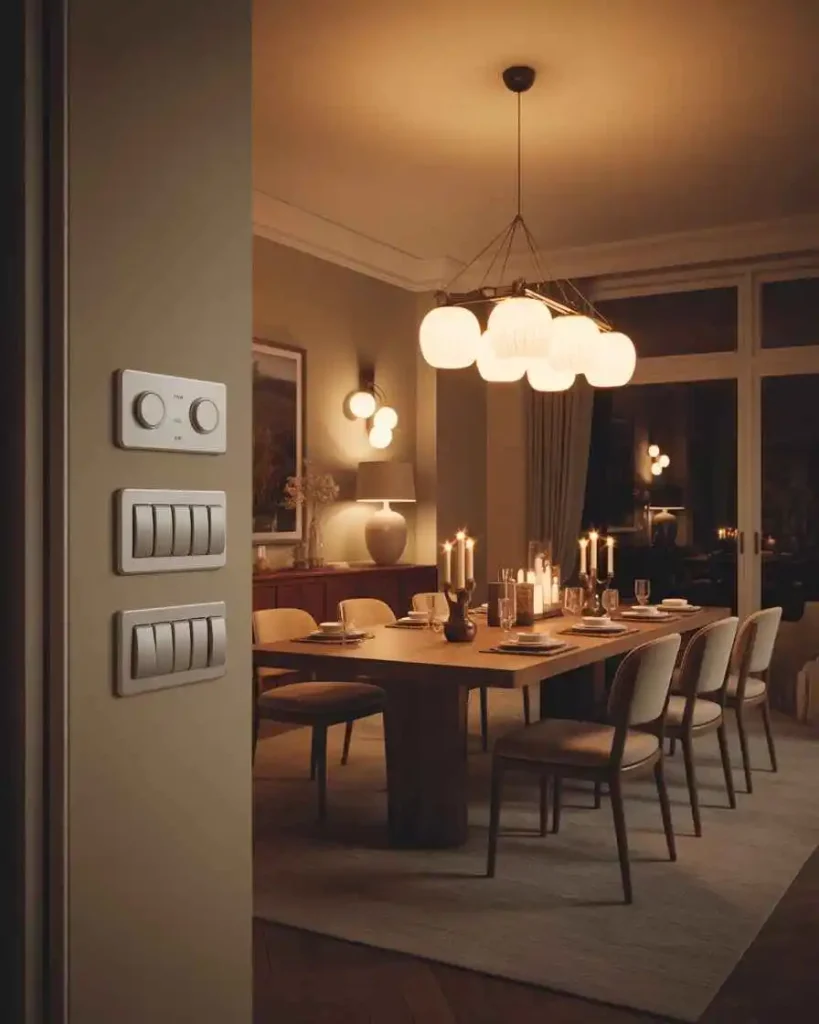
Use 5-amp circuits keeping table and floor lamps controllable together rather than individually for sophisticated unified lighting adjustments. Layer multiple light sources including overhead fixtures, wall sconces, table lamps, and candles creating adjustable ambiance appropriate for any occasion.
This practical upgrade transforms how large dining rooms function throughout day and evening making single spaces serve multiple moods. Position dimmers near dining room entries for convenient access without disrupting gatherings to adjust lighting mid-meal.
Warm Earthy Color Palettes
Layer muted browns, deep terracotta, russet reds, and olive greens that bring cocooning warmth perfect for slow meals in large dining rooms. These earth tones take inspiration from autumn creating retreats for long conversations rather than stark, cold formality.
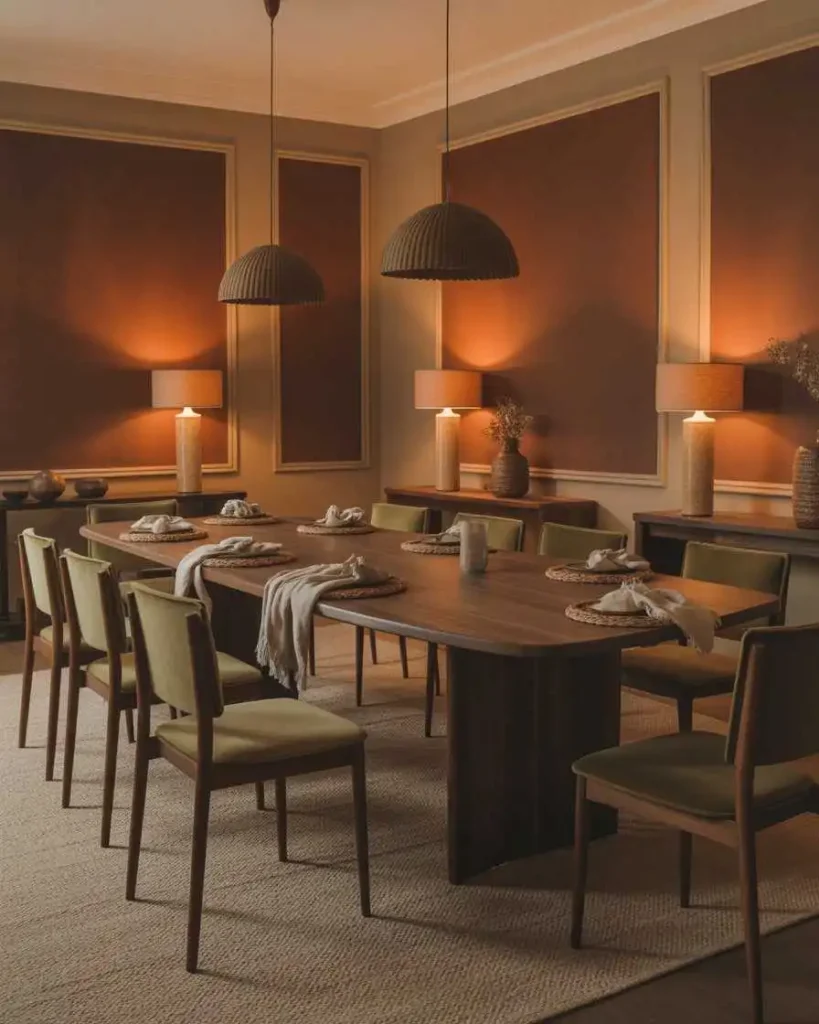
Paint walls in clay or cinnamon shades, pair with dark wood furniture, and add softly lit table lamps for grounded atmospheres. Include tactile textures through linen napkins, wool throws, and woven placemats completing inviting environments.
The warm palette prevents large dining rooms from feeling cavernous or echo-filled by creating visual warmth that makes spaces feel intimate. Balance earthy walls with cream or white trim maintaining enough contrast to define architectural details.
Maximalist Pattern Layering
Layer multiple patterns, colors, and textures in joyful abundance creating personality-filled dining rooms that spark conversation and energy. Forget coordination rules – 2026 embraces deep blues, rich reds, zesty yellows, and emerald greens with vintage artwork and mismatched tableware.
This look invites playfulness and individuality creating spaces feeling curated rather than chaotic or random. Patterned wallpaper, painted ceilings, and mixed furniture give permission for bold, unapologetically expressive design choices.
Maximalism works particularly well in large dining rooms where ample square footage prevents pattern overload from feeling overwhelming. Balance bold patterns with some solid elements in furniture or window treatments maintaining visual breathing room.
Built-In Banquette Corners
Install L-shaped or straight built-in banquettes along walls in large dining rooms creating cozy zones within expansive spaces. Fixed built-in seating becomes must-have feature in 2026 offering functionality and aesthetic appeal according to designers.
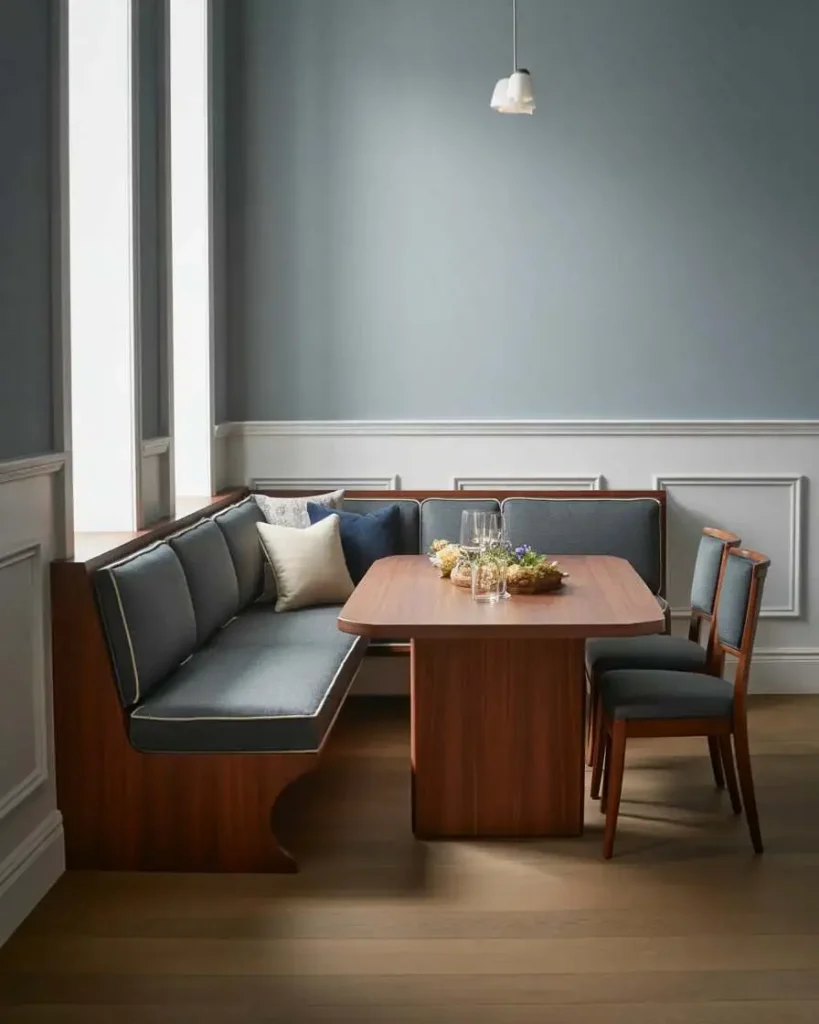
Add storage underneath banquette seats for table linens, serving pieces, and seasonal decor maximizing every inch. Pair banquettes with tables pulled slightly away from walls allowing chairs on opposite sides for flexible seating arrangements.
Upholster in performance fabrics or leather that withstand daily use while maintaining sophisticated appearances. This approach creates smaller intimate moments within larger dining spaces making grand rooms feel approachable for everyday family meals.
Multi-Functional Layouts
Design dining rooms serving multiple purposes including eating, working, homework stations, and game nights rather than single-use formal spaces. The dining room is not only for eating but socializing and gathering, requiring adaptable furniture and thoughtful layouts.
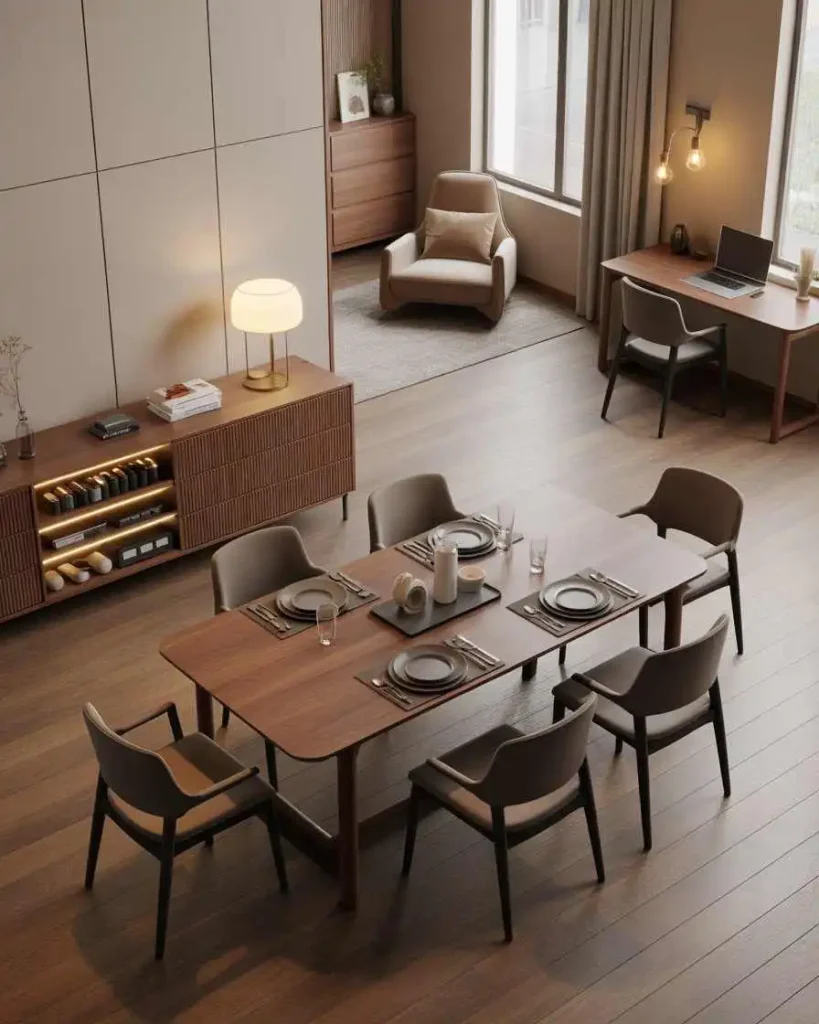
Include extendable tables that accommodate intimate family dinners but expand for entertaining larger groups during holidays. Add sideboards with built-in charging stations, task lighting, and drawer organization supporting work-from-home needs.
Position furniture maintaining clear circulation paths while creating distinct zones for different activities within one large room. This practical approach maximizes investment in square footage ensuring dining rooms earn their keep beyond occasional formal entertaining.
Final Thoughts
Large dining rooms in 2026 embrace warmth, architectural detail, and multi-functional layouts over stark formal perfection. Incorporate dark wood furniture, stone tables, and rich jewel tones creating intimate jewel boxes within expansive homes.
Focus on layered lighting with dimmers, vintage character pieces, and performance fabrics supporting genuine gathering and extended conversations. Remember that large spaces benefit from bold choices including dramatic ceilings, oversized artwork, and pattern layering that smaller rooms cannot support.
Use these research-backed trends to transform underutilized formal dining rooms into spaces designed for actual living and celebrating together.