Top 17 Living Room and Dining Room Combo Ideas
Living room and dining room combo spaces in 2026 focus on creating distinct zones without walls while maintaining cohesive design flow. Smart furniture placement, unified color palettes, and flexible layouts help shared spaces feel organized, open, and intentional. These 17 research-backed dining room ideas for combo spaces reflect how designers are maximizing open-concept layouts across…
Living room and dining room combo spaces in 2026 focus on creating distinct zones without walls while maintaining cohesive design flow. Smart furniture placement, unified color palettes, and flexible layouts help shared spaces feel organized, open, and intentional.
These 17 research-backed dining room ideas for combo spaces reflect how designers are maximizing open-concept layouts across the USA. From area rug zoning to cohesive material continuity, these approaches prove that combined spaces can feel both connected and purposefully separated.
Area Rug Zoning
Define separate living and dining zones using two distinct area rugs that coordinate through color or pattern while maintaining individual identities. Position a larger rug under your seating area extending beyond all furniture legs, then place a separate dining rug underneath the table with 24 inches extending past chairs on all sides.

This visual separation creates clear boundaries without physical barriers according to designers focused on flow without losing function. Choose rugs that share one or two colors but differ in pattern – perhaps a solid living room rug with a geometric dining rug in complementary shades.
The rugs anchor each zone while the coordinated colors maintain cohesive visual connection across the open space. Ensure both rugs are proportional to their respective furniture groupings preventing either zone from feeling cramped or disconnected.
Cohesive Color Palette
Unite your living room and dining room combo through one consistent color palette applied across both zones with subtle variations in intensity. Choose three to four main colors and distribute them throughout both spaces via walls, upholstery, curtains, and accessories for seamless flow.

Paint both zones the same wall color or use slightly different shades from the same color family creating gentle distinction. This approach works beautifully when you want spaces to feel unified but need subtle visual separation between functions.
Add your boldest color accent in just one zone – perhaps jewel-tone pillows in the living area or vibrant dining chairs – creating interest without chaos. The unified palette makes even small combo spaces feel larger and more intentional than mismatched color schemes.
Low-Profile Furniture Silhouettes
Choose low-slung sofas and dining chairs with clean architectural lines that maintain sightlines across combined living and dining spaces. Low silhouettes elongate rooms visually making them perfect for combo spaces where furniture could otherwise create visual barriers or choppy flow.

Select sofas no taller than 32-34 inches at the back allowing you to see over them into the dining area. Pair with slim-profile dining chairs rather than high-backed upholstered options that block views across the open layout.
This creates gallery-like sophistication according to 2026 designers while maintaining the open, airy feeling combo spaces require. The streamlined furniture prevents either zone from dominating or overwhelming the shared square footage.
Dining Room Ideas Layout
Create multiple functional zones within your combo space including dining, living, and supplemental areas like bar carts or reading nooks. Modern dining room ideas for 2026 acknowledge these spaces work harder than ever accommodating meals, work, homework, and entertaining simultaneously.

Position your dining table along one wall or in a corner maximizing the larger central area for living room furniture and traffic flow. Add a slim console or bar cart between zones serving as both storage and subtle physical division without blocking sightlines.
Include flexible pieces like ottomans or nesting tables that move between zones as needs change throughout the day. This multi-functional approach ensures every inch earns its keep in typically space-limited combo configurations.
Consistent Flooring Material
Install the same flooring throughout both living and dining zones creating seamless visual flow and making spaces feel significantly larger. Continuous flooring eliminates visual breaks that chop combo spaces into smaller, disconnected segments according to interior designers.

Choose warm wood tones, neutral tile, or performance luxury vinyl that flows uninterrupted from one zone to the next. The consistent material allows area rugs to define zones without competing flooring patterns creating visual chaos.
If you inherit different flooring in each zone, use transition strips in matching wood tones or colors minimizing the visual disruption. This investment creates foundational cohesion allowing you to experiment more freely with furniture, color, and accessories.
Statement Lighting Separation
Differentiate living and dining zones using distinct but coordinating statement lighting that serves both function and visual separation. Hang a dramatic chandelier or pendant cluster centered over your dining table drawing clear attention to the eating area.

Position floor lamps, table lamps, or wall sconces in the living area creating layered lighting at different heights complementing the overhead dining fixture. Choose lighting in the same metal finish – perhaps all brass or all black – so fixtures coordinate without matching exactly.
This creates intentional definition according to dining room ideas for combo spaces while maintaining design cohesion across zones. Install dimmers on all light sources allowing each zone to adapt independently for different activities and times of day.
Furniture Placement Boundaries
Arrange furniture creating natural walkways and visual boundaries between living and dining areas without actual walls or dividers. Float your sofa perpendicular to the dining area rather than against a wall using its back as a subtle room divider.
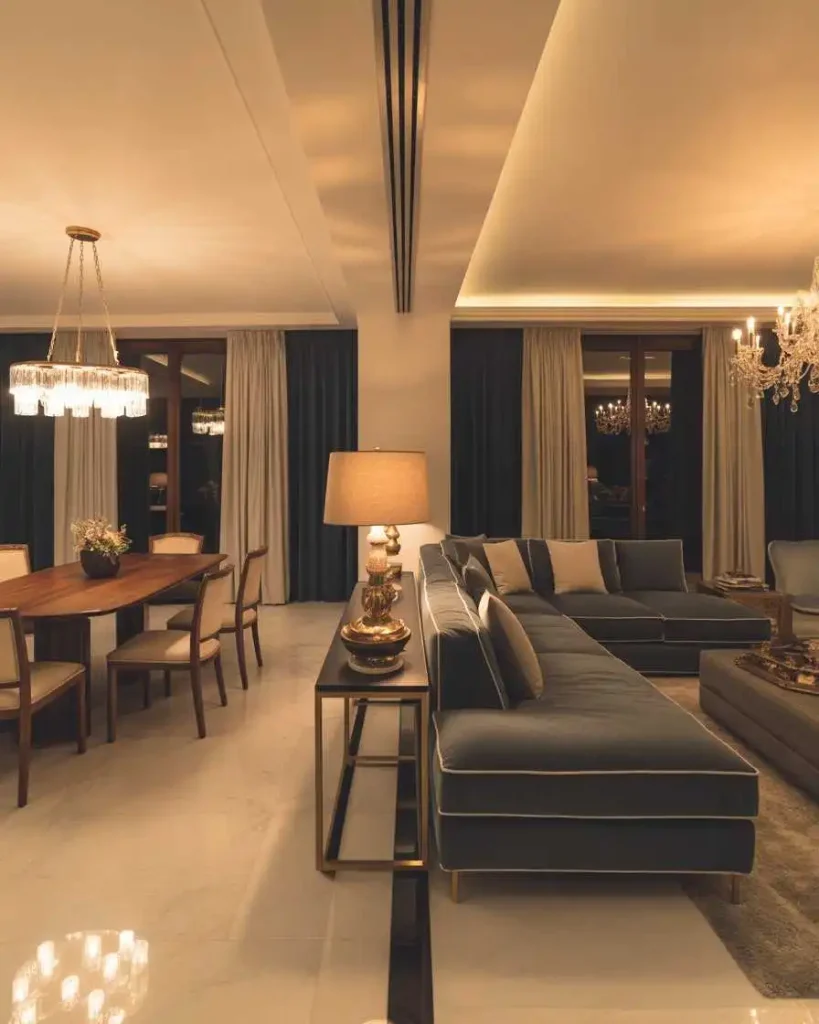
Position console tables, bookcases, or credenzas behind sofas creating defined backs to living zones that face toward dining areas. Leave 36-48 inches of clear pathway between zones ensuring comfortable circulation without bumping furniture during daily movement.
This strategic placement creates psychological separation guests instinctively respect without feeling closed off or cramped. The open arrangement maintains sightlines and flow while giving each zone clear, respected boundaries for their specific functions.
Monochromatic Calm Palette
Layer multiple shades of one neutral color throughout your combo space creating serene, pulled-together atmospheres where both zones feel unified. Choose beige, gray, taupe, or cream as your base and use lighter shades on walls, medium tones in larger furniture, and deeper accents in pillows or dining chairs.

This tonal approach lets patterned artwork, colorful accessories, and natural materials pop without creating visual overwhelm in shared spaces. The monochromatic strategy works particularly well in smaller combos where too many competing colors fragment already-limited square footage.
Add warmth through varied textures – linen curtains, velvet pillows, wood furniture, and wool rugs – preventing single-color schemes from appearing flat or boring. The calm cohesion makes even modest square footage feel sophisticated and intentionally designed.
Open Shelving Divider
Install floor-to-ceiling open shelving between living and dining zones creating functional storage and subtle separation without blocking light or views. The see-through nature of open shelves maintains the open-concept feeling while providing defined backs to each zone’s furniture arrangement.

Style shelves with books, decorative objects, plants, and storage baskets mixing practical items with beautiful displays. Position the shelving perpendicular to walls creating natural room division that guides furniture placement and traffic patterns logically.
This works beautifully in dining room ideas where storage is essential but traditional china cabinets would overwhelm limited square footage. Keep shelving unit under 60 inches wide preventing it from dominating the space or creating too much visual weight between zones.
Continuous Wall Treatment
Apply the same wall treatment, paint color, or wallpaper throughout both zones creating envelope-like cohesion that unifies combo spaces. Paint all walls including those behind both dining and living areas in one saturated hue or warm neutral reducing visual breaks.
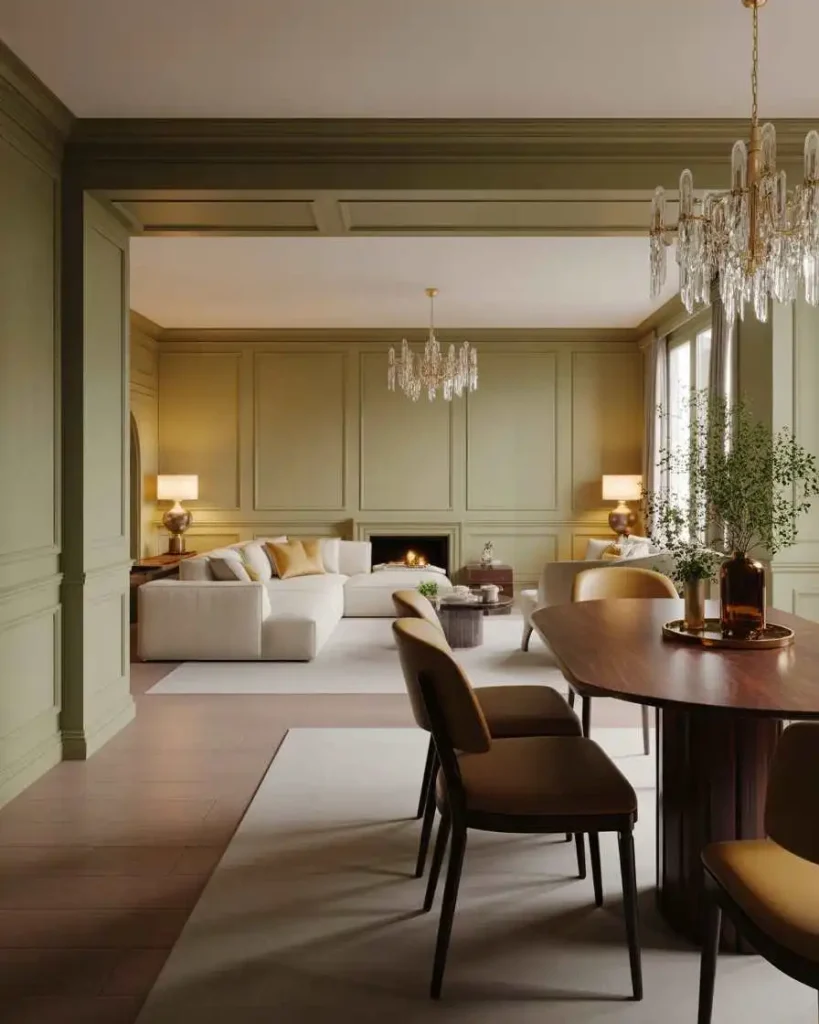
This color-drenching technique saw a 149% spike in real estate listings as it creates deliberate, cohesive atmospheres according to recent data. Alternatively, install consistent wainscoting, board-and-batten, or wallpaper patterns flowing seamlessly from living into dining areas.
The uninterrupted wall treatment makes small combo spaces feel significantly larger by eliminating choppy color changes that fragment square footage. Add variety through different furniture styles, accessories, and lighting rather than competing wall colors that create visual chaos.
Modular Flexible Furniture
Choose extendable dining tables, nesting side tables, and sectional sofas with modular pieces adapting to changing needs in multi-functional combos. Dining room ideas for 2026 emphasize adaptability with furniture that accommodates both intimate family meals and larger entertaining without permanent bulk.

Select dining tables starting at 60 inches but extending to 84 inches for dinner parties, then collapsing for daily use. Add lightweight chairs that stack or tuck completely under tables when not needed freeing circulation space in tight combos.
Include sectional sofas with movable ottomans serving as extra seating, coffee tables, or footrests depending on current needs. This flexibility prevents combo spaces from feeling overwhelmed by furniture when zones aren’t in active use simultaneously.
Texture Continuity Balance
Layer similar textures throughout both zones creating tactile cohesion – perhaps velvet in living room pillows echoed in dining chair upholstery. This creates visual rhythm and intentional connection without requiring furniture pieces to match exactly from zone to zone.

Choose one dominant texture like linen and repeat it across curtains, throw pillows, and dining chair seats establishing consistent material language. Add contrasting textures in smaller doses – perhaps leather accent chairs in living areas paired with wood dining chairs maintaining material variety.
The repeated textures create subliminal connections your eye follows naturally across the combined space making it feel curated and intentional. This approach works across any design style from modern to traditional to eclectic bohemian aesthetics.
Vertical Color Blocking
Paint lower walls in one color and upper walls or ceilings in complementary shades creating horizontal visual interest throughout combined zones. This color-capping technique differs from traditional color-drenching by varying intensity top to bottom adding dimensional depth to shared spaces.

Apply the same two-tone treatment consistently across both living and dining areas maintaining cohesion through the unified color approach. The horizontal color division draws eyes around the perimeter rather than focusing on the lack of separation between zones.
This works beautifully in combo spaces with tall ceilings where single wall colors can feel stark or overwhelming across large square footage. Add crown molding or picture rails at color transitions creating architectural detail that elevates builder-grade combo spaces affordably.
Dining Room Ideas Storage
Maximize vertical storage in both zones using tall bookcases, floating shelves, and wall-mounted cabinets that don’t consume precious floor space. Dining room ideas for combo layouts require creative storage since traditional bulky buffets or entertainment centers would overwhelm limited square footage.

Install floor-to-ceiling shelving on one wall serving both zones – lower shelves for dining storage like linens and serving pieces, upper shelves for books and living room displays. Add closed storage through cabinets with doors hiding clutter while open shelves display curated decorative items creating visual interest.
Position storage furniture against walls maintaining clear central pathways between zones that feel open rather than cramped. The vertical emphasis draws eyes upward making standard ceiling heights feel taller and spaces more generous.
Consistent Hardware Finishes
Unify combo spaces by using the same metal finish across all hardware, lighting fixtures, and decorative accents in both zones. Choose brass, black, chrome, or brushed nickel then repeat it consistently on curtain rods, lamp bases, cabinet pulls, and picture frames.

This creates subtle visual thread connecting both zones without requiring furniture or colors to match exactly throughout the combined space. The consistent metal finish suggests intentional design choices and creates cohesion even when mixing various furniture styles between zones.
Limit yourself to one or maximum two metal finishes preventing the hodgepodge appearance that fragments combo spaces visually. Clean and polish hardware regularly maintaining distinct finishes that create sophisticated layered details throughout the shared environment.
Multi-Height Seating Variety
Create visual interest and functional flexibility by varying seating heights between zones – low sofas in living areas, standard dining chairs, and tall bar stools. This variation adds dimension preventing combo spaces from feeling too uniform or predictable while serving practical purposes.

Add counter-height seating at a peninsula or breakfast bar between zones creating casual eating space supplementing the formal dining table. The varied seating heights naturally define different zones and their intended uses without requiring physical separation or walls.
Include ottomans, poufs, or floor cushions offering flexible additional seating that moves freely between zones as entertaining needs change. This layered approach to seating creates dynamic, lived-in combo spaces that feel thoughtfully designed for actual daily use.
Final Thoughts
Living room and dining room combo spaces in 2026 succeed through smart zoning, cohesive color palettes, and flexible furniture that adapts to changing daily needs. Focus on creating flow without losing function by defining zones through rugs, lighting, and strategic furniture placement rather than walls.
Maintain visual connection through consistent flooring, wall colors, and hardware finishes while allowing each zone its own identity. Remember that low-profile furniture and vertical storage maximize limited square footage without sacrificing style or functionality. Use these research-backed approaches to create combo spaces that feel both open and purposefully organized for modern living.